


In collective memory, the French Revolution erupted on a July day in 1789, driven by Enlightenment ideas and public frustration with royal privilege. However, fourteen years earlier, a little-known earthquake shook the Kingdom of France. In the spring of 1775, dozens of towns and cities—from Picardy to the gates of Versailles—became the stage for an unprecedented wave of rioting: the “Flour War” (La guerre des farines).
Often relegated to footnotes in history textbooks, this singular episode constituted the true general rehearsal of the revolutionary drama.
It all began with an economic reform intended to modernize the nation. In the autumn of 1774, the young King Louis XVI, freshly ascended to the throne, appointed Anne Robert Jacques Turgot as Comptroller General of Finance. Imbued with physiocratic economic doctrines, Turgot was convinced that the market should regulate itself. On September 13, 1774, he signed a decisive decree establishing the free trade of grain.
Until then, royal controls strictly regulated the price and transport of wheat to protect the public from scarcity. By placing his trust in free enterprise, Turgot intended to stimulate agricultural production and eliminate shortages through open competition.
A Soaring Cost of Living
The calendar, however, turned out to be disastrous. The harvests of summer 1774 had been poor due to severe weather, and by the end of winter, wheat reserves began to run dry. Freed from price controls, traders and speculators naturally raised their prices.
In just a few months, the price of bread—the absolute foundation of the working-class diet—soared. For workers, artisans, and modest peasants who already spent over half their household income on food, the situation quickly became unbearable.
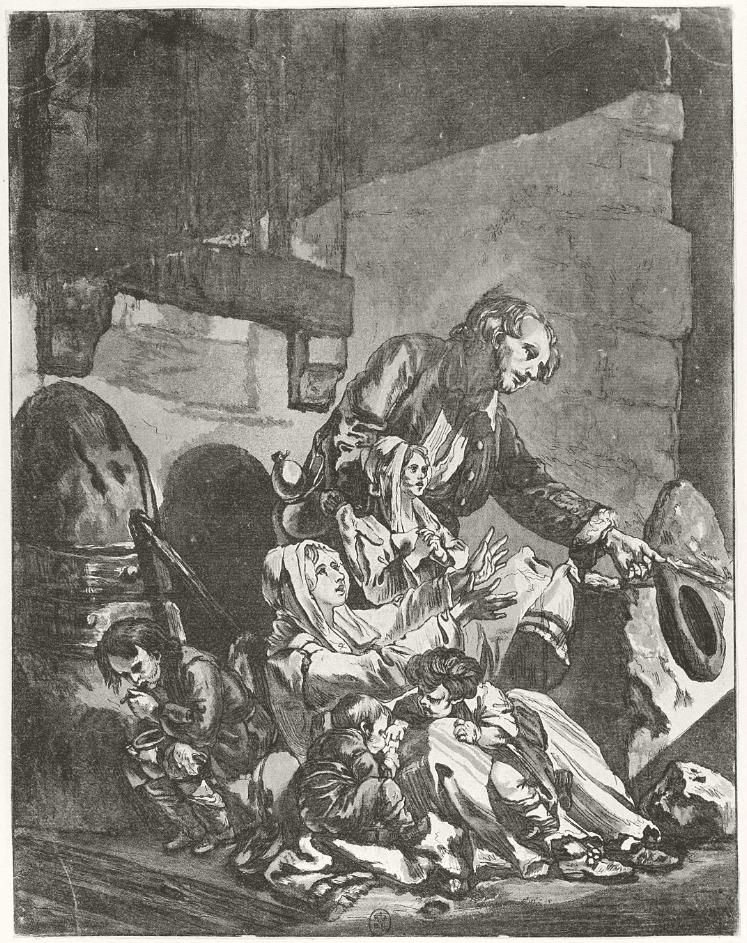
Le Fermier brûlé ou la famille pauvre by François-Philippe Charpentier, depicting rural French poverty in the 18th century.
In late April 1775, the spark ignited in Burgundy before spreading with disconcerting speed along river and road trade routes into the Paris Basin.
HISTORICAL MECHANIC: TAXATION POPULAIRE
The rioters did not pillage blindly. Peasants and citizens intercepted grain convoys, invaded markets, and occupied bakeries to seize flour. They forcibly resold it at what they deemed a traditional “just price”—around two sous per pound—before handing the collected proceeds directly back to the merchants.
The movement escalated rapidly. On May 2, 1775, a massive crowd marched on Versailles and invaded the courtyard of the royal chateau. Louis XVI appeared on the balcony to appease the crowd, promising a reduction in bread prices. But by the next day, agitation reached Paris, where bakery shops were ransacked across the entire capital.
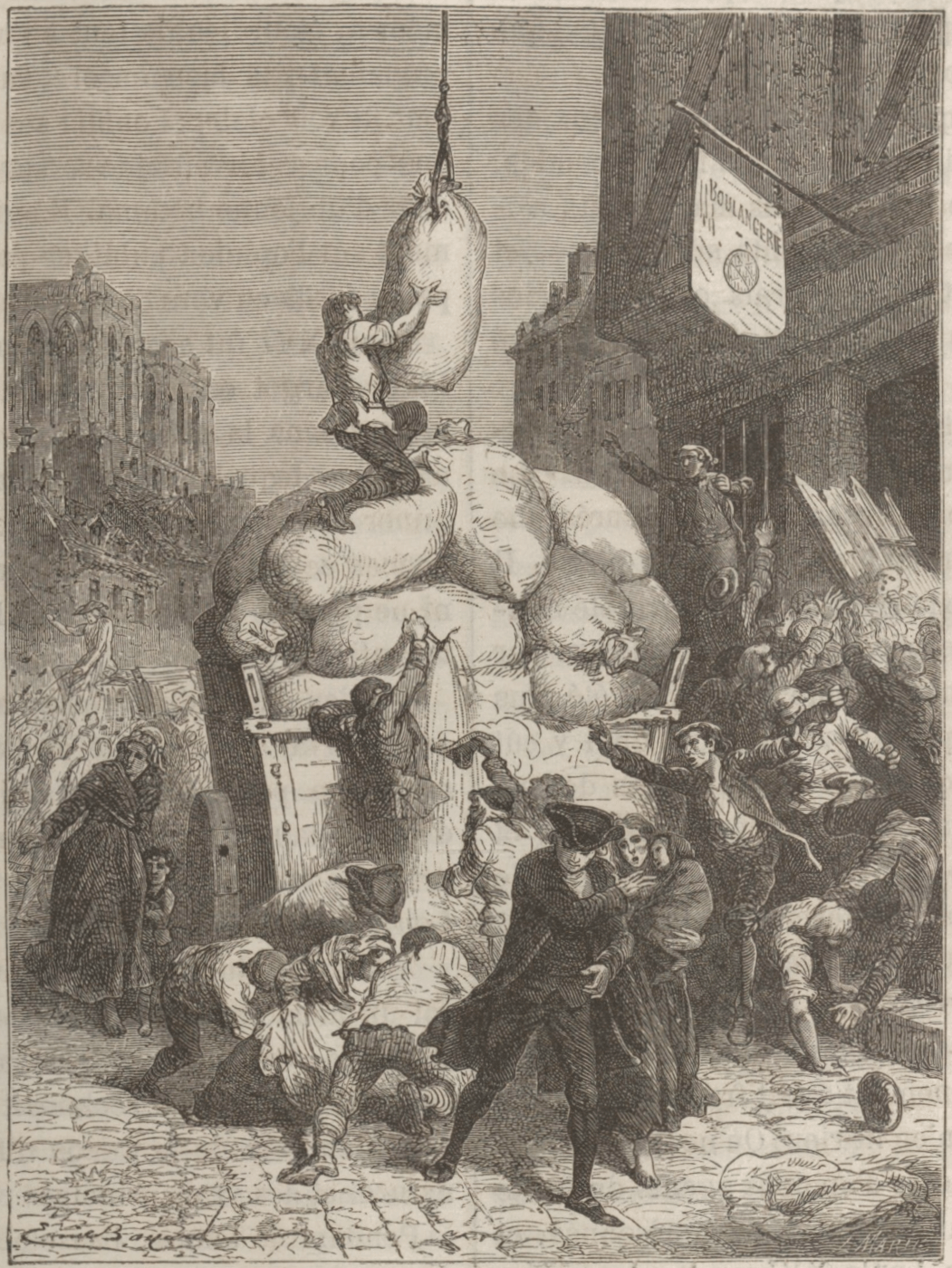
Pillage d’un convoi de farine à Paris (1775) by Émile Bayard, illustrating rioters raiding grain shipments.
Royal Repression & The Aftermath
Faced with what he perceived as a direct challenge to royal authority, Turgot refused to back down on his deregulation decree. The crown’s response was swift: more than 25,000 soldiers were deployed in and around Paris.
Repression was severe. Hundreds of rioters were arrested, and two ringleaders were publicly hanged in Paris while wearing signs warning against bread theft. By the end of May, military force had restored order.
Though the Flour War was quickly suppressed, its political repercussions ran deep. It marked the definitive breakdown of the traditional “nourishing pact” that bound the King to his subjects. Fourteen years later, popular anger was no longer content with adjusting bread prices—it overthrew the Ancien Régime entirely.