
Talmont-sur-Gironde
A Medieval Bastide on the Estuary
Walking into Talmont feels like stepping back 700 years. The village is famous for its white-washed Saintongeais houses with their iconic blue and green shutters.
The Big Highlights
Sainte-Radegonde Church
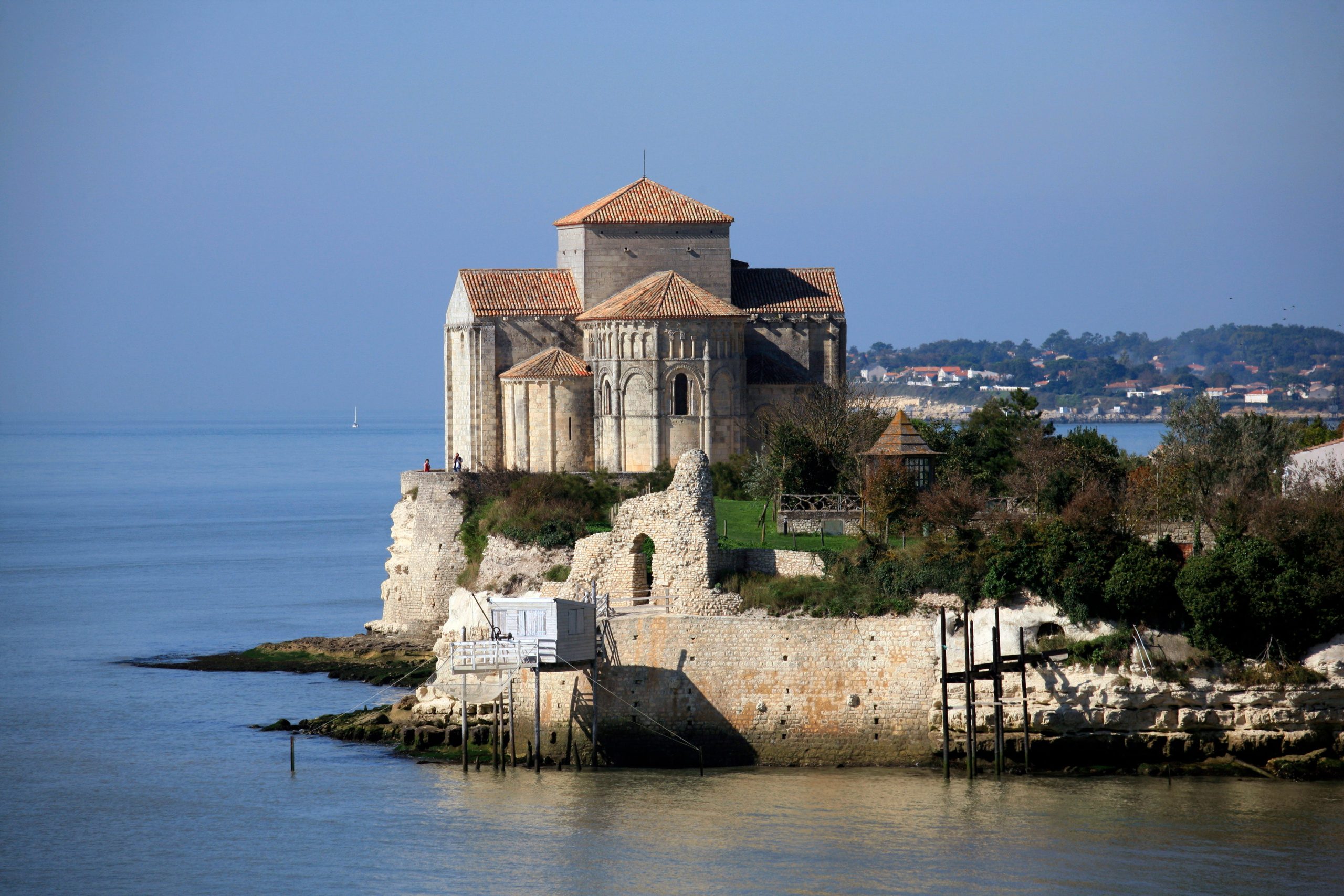
A 12th-century Romanesque masterpiece perched on the cliff’s edge. Look for the marine cemetery next to it.
The Rampart Walk
Follow the old stone walls that once protected the town. You’ll see the traditional “Carrelets” (fishing huts).
📸 4 Best Photo Spots
📍 The “Hollyhock Alley”
Best in July and August for the classic Talmont look.
📍 The Cliffside Church
Capture the arches against the gray-blue Gironde estuary.
📍 The “Carrelets” View
High-angle shots of fishing huts from the northern ramparts.
📍 The Marine Cemetery
Poetic white stone crosses against the horizon.
A Journey Through Time
Getting to Talmont
🚗 By Car: Take the D145 west from Chenac (11 mins).
🚲 By Bike: The “Canal des 2 Mers” path is a stunning, flat 30-minute ride.